

Bhutan, the Land of the Thunder Dragon, is a country deeply rooted in spirituality, tradition, and cultural symbolism. Among its most captivating cultural expressions are its mask dances (Cham dances) and folk dances, both of which are prominently featured in the annual religious festivals (Tsechus) held across the country, particularly in the districts of Thimphu and Paro.
Mask Dances (Cham Dances)
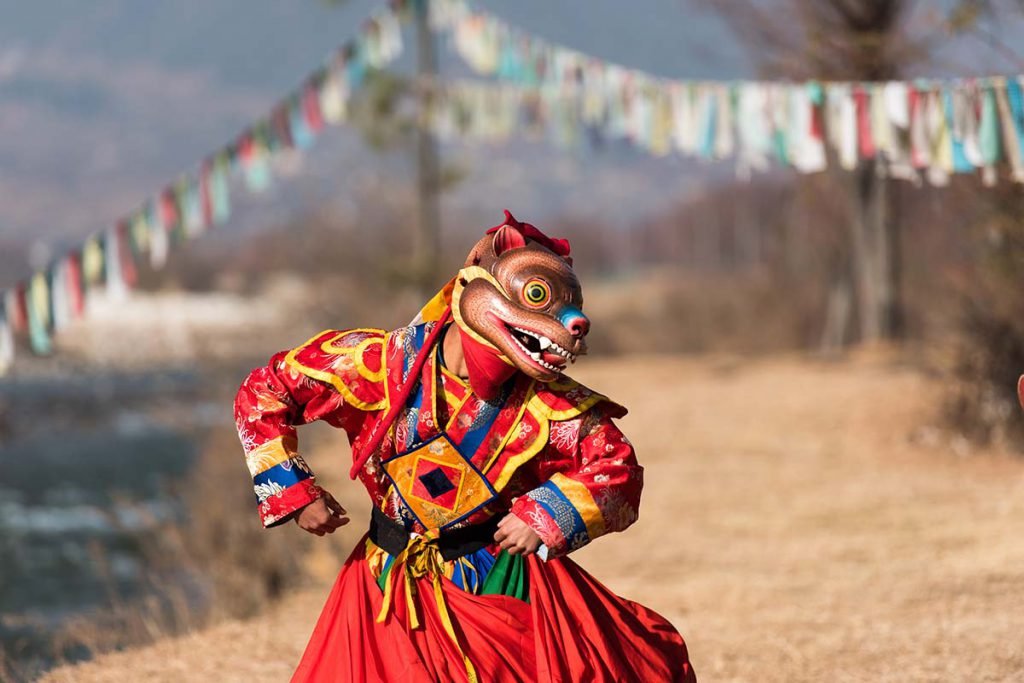
Cham dances are sacred ritual performances, typically performed by monks and laymen during religious festivals. They are more than just cultural showcases; they are considered spiritual offerings to deities and visual representations of Buddhist teachings.
Purpose and Significance
- Mask dances serve as a form of meditation, purification, and blessing for both performers and viewers.
- They depict moral lessons, spiritual battles, and stories from Tantric Buddhism.
- Spectators believe that watching these dances helps to accumulate merit, purify past sins, and prepare for a better rebirth.
Costumes and Masks
- Dancers wear vibrant silk robes and elaborate masks representing animals, deities, demons, and enlightened beings.
- The masks are often hand-carved and painted with symbolic colours and motifs.
Common Mask Dances
- Dance of the Black Hats (Shanag Cham): Symbolizes the removal of evil spirits.
- Dance of the Lords of the Cremation Grounds: Associated with the fierce deities who protect the Dharma.
- Dance of the Eight Manifestations of Guru Rinpoche: Depicts the eight forms of the revered saint Padmasambhava.
Folk Dances:
Folk dances in Bhutan are typically performed by village men and women, often during festivals, weddings, and other cultural or religious gatherings. These dances are an important part of Bhutanese tradition and are used to tell stories, celebrate seasonal events, and honor deities. There are also trained performers from cultural troupes or the Royal Academy of Performing Arts (RAPA) in Bhutan who perform folk dances during official ceremonies and national celebrations.
Characteristics
- Dances are performed in groups, often in circular or line formations.
- Accompanied by traditional instruments like the lingm (flute), dranyen (lute), and chiwang (fiddle).
- Themes include love, harvest, mythology, and local legends.
Notable Folk Dances
- Zhey and Zhem: Courtly dances often performed by men and women respectively.
- Boedra and Zhungdra: Traditional song-dance forms, often performed in festivals and social gatherings.
- Ausara: A comical, theatrical folk performance with elements of satire.
Thimphu Tsechu and Paro Tsechu
These are the two most famous and grand Tsechus in Bhutan, where both mask and folk dances are prominently featured.
Thimphu Tsechu
- Held in the capital at the Tashichho Dzong.
- Takes place in September or October.
- Features some of the most elaborate Cham dances, drawing huge crowds including local residents, pilgrims, and tourists.
- Highlights include the Guru Tshengye Cham (Eight Manifestations of Guru Rinpoche)
Paro Tsechu
- Hosted at Rinpung Dzong, usually in March or April.
- One of the oldest Tsechus in Bhutan.
- Known for its intense spiritual atmosphere and scenic backdrop.
- Includes unique mask dances, such as the Dance of the Terrifying Deities, and vibrant folk performances and the unveiling of the giant Thongdrel (religious scroll painting).
Whether in Thimphu or Paro, Bhutanese mask dances and folk dances are not merely performances—they are a living embodiment of the country’s spiritual heritage, communal harmony, and artistic expression. Attending these festivals offers a rare glimpse into Bhutan’s soul, where the sacred and the celebratory merge in rhythm, color, and devotion.